

I am an administrative agent (administrative scrivener) with an office in Songdo, Yeonsu-gu, Incheon. I would like to share an episode I came across in my work.
The Document That Came 12 Days Before the Balance Payment
To begin with the conclusion, that seal impression certificate was issued after a video call between the mother in her hospital room and the staff member at the community service center.
The daughter was standing at the counter of the administrative welfare center near the hospital, and the mother, sitting on her hospital bed and looking at the screen of a mobile phone, stated her name, date of birth and address. She also said herself that she was selling her house and had entrusted her daughter with obtaining the certificate. The call lasted a little over 10 minutes, and 12 days remained until the balance payment date.
It took five weeks to reach those 10 minutes. In that time the daughter was turned away at the counter four times. When she first asked for a consultation, this is what she said: “I’ve remade the authorization letter four times, and each time they tell me it’s no good. Is it that a certificate for a property sale simply can’t be obtained by proxy?”
It was not a document that could not be obtained by proxy. The problem lay in the way the authorization letter was written.

The Four Visits That Ended in Rejection
The daughter is in her late 40s and works as an instructor at a private tutoring academy in Incheon. Her mother is 78 years old. She had been living alone in a small city in the Chungcheong region when she collapsed from a cerebral infarction last late spring, and after surgery she is now in a rehabilitation hospital in Incheon.
Her cognition is clear. She converses, and she remembers the side dishes she ate yesterday. However, paralysis remains in her right arm and leg, so she cannot walk, and she cannot hold a pen in her right hand. Writing the three characters of her name with her left hand is all she can do at present.
Here is what the daughter tried on her own.
- She downloaded an authorization letter form from the internet, filled it in on a computer, printed it, got only her mother’s signature in the hospital room, and went to the community service center. She was told that the authorization letter for issuing a seal impression certificate must use the form prescribed by law, and that an authorization letter prepared on a computer is not accepted.
- She picked up the form at the community service center, filled in the blanks herself by hand, and her mother only signed. At the counter she was asked who had written it, and she answered truthfully. It was sent back on the grounds that the authorization letter must be written by the principal in person.
- The mother wrote it herself with her left hand. It took 30 minutes, but the resident registration number and address characters overlapped and could not be read. The mother’s ID, too, had been brought only as a photo taken with a mobile phone. That was when the daughter first heard that the original ID must be submitted.
- On the weekend she went down to her mother’s house and found the original resident registration card. It was a 2 hour 30 minute trip one way. The authorization letter that the mother rewrote was again hard to read in its numbers. At the counter she was told that for a real estate sale the buyer’s name, address and resident registration number are also required. All the daughter knew was the buyer’s name and phone number.
Five weeks passed during the four trips. All four explanations were correct. The counter pointed out exactly what was missing from the documents she brought that day. But the daughter had never been told everything that was needed all at once.

Why Those Five Weeks Were Not Simply Time Gone By
The only property in the mother’s name is one apartment of 59㎡ in a small city in the Chungcheong region. The sale price was KRW 180 million. It is the home where the mother had lived for more than 30 years, and since the father’s death it had been her money for old age.
The rehabilitation hospital cost KRW 1.3 million a month in admission fees, and caregiver fees came to a little over KRW 2 million a month. On the daughter’s academy salary, two months was the limit. So they decided to sell the house, and the mother, too, said in her hospital room that this was what they should do.
The sales contract had already been concluded. A down payment of KRW 18 million had been received, and the balance payment date was two months after the contract date. When the daughter came for the consultation, 25 days remained until the balance payment date.
If ownership cannot be handed over on the balance payment date, the contract is put at risk. The buyer had cleared out the home where he lived and had fixed a moving date. If the contract is cancelled, returning the down payment comes with the problem of a penalty for breach, and there would also be no way to pay next month’s hospital bill.

The Client Who Arrived 15 Minutes Before Her Appointment
When applying for the consultation by phone, the daughter sent photos of her documents by email in advance. They were the four rejected authorization letters, notes in which she had written down what she was told at the counter, and the first page of the sales contract.
Her appointment was at 3 p.m. on Wednesday, but she arrived 15 minutes early. In the clear file she carried, the documents were arranged in date order, and the guidance she had received on each day she visited was written in ballpoint pen on the back pages.
For the first 30 minutes I did not look at the documents and only listened to the situation. I confirmed in turn the mother’s condition, the location of the hospital, the contract terms, the balance payment date, and the monthly costs the daughter was bearing. After that, I re-read the four pages of notes against the provisions and the prescribed form.

The Real Reasons for the Rejections
First I answered the daughter’s question. A seal impression certificate for a real estate sale can also be obtained by a proxy.
Article 13 of the Enforcement Decree of the Seal Impression Certification Act provides that a seal impression certificate is applied for by the person themselves or by a proxy. The proxy must be 17 years of age or older and must submit the IDs of the principal and of the proxy together with the authorization letter for issuing a seal impression certificate. There is no provision that bars proxy applications because the certificate is for a real estate sale. For a sale certificate, there is one additional step: the buyer’s name, address and resident registration number are told to the official in charge, and the applicant confirms the contents entered in the certificate and then signs. What is excluded for the sale certificate is online issuance as an electronic document through Government24.
Putting the four rejections against these standards, there were three problems.
- Authorization letter: The prescribed form (Attached Form No. 13 of the Enforcement Decree of the Seal Impression Certification Act) says it must be “written in the principal’s own handwriting.” One prepared on a computer, a photocopy, or one written by the proxy on the principal’s behalf is in principle not accepted.
- ID: Both the principal and the proxy must submit the original. Copies or photos taken with a mobile phone are not accepted. This part was resolved at the fourth visit.
- The buyer’s personal details: The name, address and resident registration number, all three, are required.
The ID and the buyer’s personal details were things that only needed to be prepared. What had not been resolved was the authorization letter. The mother clearly intended to delegate, but she could not put that intent down in her own handwriting. This authorization letter is also not a document that an administrative agent can write on someone’s behalf.
The daughter asked, “Then what were the past five weeks?”
I answered that some things had been confirmed during those five weeks. The original ID had been secured, and it had been confirmed that the mother could not fill in the form with her left hand. One task remained: to find out how an issuing office confirms the intent to delegate of a person who cannot write by hand.

You Do Not Have to Go to the Registered Address
The daughter had been thinking that to get the seal impression certificate she had to go to the community service center in the Chungcheong region where her mother’s address was registered. That is not necessary.
A seal impression certificate is issued, regardless of the registered address, at city, county and district offices and at town, township and neighborhood community service centers across the country. The Enforcement Decree provides that one must visit the competent certifying office where the seal was registered only when the issuing office cannot issue the certificate electronically.
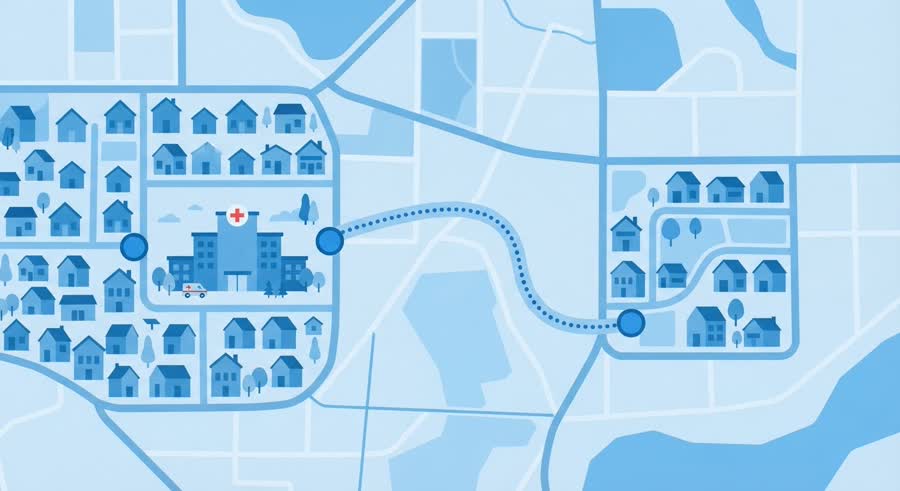
So we chose as the counter the administrative welfare center in Incheon closest to the hospital. Considering the confirmation procedure described later, a place near the hospital was better.
The ID and the Seal Were in the Second Drawer of the Wardrobe
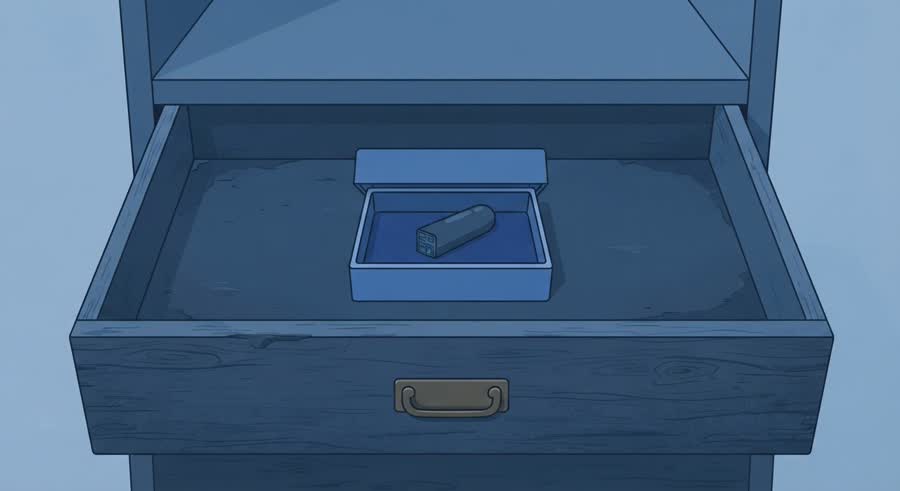
This happened when the daughter went down to her mother’s house ahead of the fourth visit. When she asked where the resident registration card was, the mother thought for a moment and then said precisely: “Second drawer of the wardrobe, the blue box. It’s there with the seal.”
It really was there. Inside the blue box were the resident registration card, the registered seal and two old bankbooks. The daughter brought the seal along as well.
This seal helped later. When you obtain a seal impression certificate, you do not need to bring the seal. The issuing office stamps the registered seal impression on the certificate. But the seal stamped on the sales documents must be the same as the seal impression on the certificate. Had the seal been lost, a report of change of the registered seal would first have had to be filed with the competent certifying office for the registered address, and that would have taken that much more time.
When the Authorization Letter Cannot Be Handwritten
The Seal Certification Handbook that the Ministry of the Interior and Safety distributes to issuing offices has a passage that deals with this case. It says that if it is clear that the principal cannot write by hand because of a physical disability or the like, the issuing office may issue the certificate, with respect to an authorization letter that the proxy has prepared according to the principal’s wishes, after confirming by telephone, video call or a similar method that the person is the principal and that the principal intends to delegate.
Conditions are attached to this. The circumstances that prevent handwriting must be clear, and the principal must be able to express his or her own intent. The confirmation method is decided by the issuing office. If the staff member cannot confirm the person’s identity or intent to delegate, the applicant is directed to face-to-face issuance, in which the principal visits in person.
The mother met both conditions. The fact that she could not use her right hand was confirmed by her medical records, and she was able to answer questions clearly.
So I set the sequence as follows. The daughter writes the authorization letter as the mother dictates it, and the mother signs with her left hand. Before going to the counter, we inform the issuing office of the circumstances in advance and settle the confirmation method.

Why I Asked Again for the Wording of the Medical Opinion Letter
To explain the circumstances to the issuing office, supporting documents were needed. The document first obtained from the hospital said this: “The above-named patient is hospitalized for cerebral infarction and has difficulty moving about.”
This sentence was not enough. There are two things that the staff member needs to know. Why this person cannot write the authorization letter herself, and whether she is in a condition to express her own intent. “Has difficulty moving about” answers neither.
I asked the attending physician whether he or she could write two things. Whether she can write with her right hand, and whether she is able to communicate and express her intent.
The newly obtained medical opinion letter read: “Right hemiplegia; unable to write using the right upper limb; unable to walk independently. Alert; able to communicate and express intent.”
It described the same patient in the same condition, but the question the document answers had changed. The staff member judges whether the requirements are met from the sentences in the document. That is why I asked for the facts that exist to be written in sentences the staff member can judge by. This is different from asking for facts that do not exist to be created.
Carrying a copy of the medical opinion letter and a one-page statement of circumstances, the daughter first visited the administrative welfare center near the hospital. The statement set out the circumstances that prevented the mother from writing by hand, what she intended to delegate, and the times at which a video call was possible. The staff member said that on the day of issuance, from the counter, a video call would be placed to the hospital room to confirm the person’s identity and her intent to delegate.

Why We Informed the Buyer First
The buyer’s name, address and resident registration number go into a seal impression certificate for a sale. To get the resident registration number, we had to contact the buyer’s side anyway. I recommended to the daughter that she include the current situation and the schedule in that contact.
The daughter hesitated. She was worried that if she told the buyer the documents were delayed, he might become anxious and propose breaking the contract.
I told her we should inform him anyway, for two reasons.
① If we hid it and the documents were not ready on the balance payment date, there would be no time to negotiate that day, because it is the day the buyer has loaded his belongings for the move. If we tell him now, three weeks remain.
② Telling him “the documents may not come out” causes anxiety, but telling him “we plan to have it issued on this date by this procedure, and the backup date is this” is a schedule notice.
So we made a one-page schedule and sent it. It stated the planned issuance date and the backup date, the three items of the buyer’s personal details that were needed, and a request that, if there were a delay, he adjust the balance payment date by a few days. About the mother’s condition, it stated only the facts.
The reply came three days later. The buyer sent a copy of his resident registration card and said he would leave the balance payment date as it was but, if unavoidable, would cooperate with an adjustment of up to 10 days. Those 10 days were not used.

One Character in the Buyer’s Name
Two days before issuance, while organizing the buyer’s personal details, I took out the copy of the sales contract again.
In the buyer column of a seal impression certificate for a sale, the staff member enters what the applicant states at the counter, and the applicant confirms it and signs. After signing, the applicant is responsible for that content. If the buyer column is inconsistent with the contract or the registration documents, the certificate must be issued again.
The middle character of the buyer’s name written in the contract differed from the middle character in the daughter’s note. They were two characters that are often confused, and the note that the daughter had hurriedly jotted down on the day of the contract was the one that was wrong. When checked against the copy of the resident registration card the buyer had sent, the contract was correct.
Had this character been called out at the counter on the day of issuance as it stood in the note, the certificate would have had to be obtained again, and the video call confirmation with the mother would have had to be done one more time.

The Sequence for Finishing Two Things in One Day
In setting the date of issuance, I lined up one more thing. The side preparing the ownership transfer documents also had to come to the hospital to confirm the mother’s identity in person. The buyer’s side was handling that schedule. I contacted them, confirmed the date of the visit, and arranged it for the afternoon of the same day as the video call confirmation.
The mother sitting up and answering a stranger’s questions needs to happen only once, packed into a single day. If it is split over two days, she will be exhausted for two days.

Those 10 Minutes
At 10 a.m. on the day of issuance, the daughter submitted at the counter of the administrative welfare center the authorization letter, her mother’s resident registration card, her own ID and the medical opinion letter. The authorization letter was one that the daughter had written the day before in the hospital room as her mother dictated it, and the mother had signed with her left hand. The daughter said she had helped her mother practice the signature in the hospital room; the signature, whose characters had overlapped and been hard to make out at first, had clear strokes on this day.
The staff member placed a video call to the hospital room. In the room, the caregiver was supposed to hold the mobile phone, but the screen kept shaking. The family member of the patient in the next bed lent a phone stand. The daughter later bought that person a drink.
The staff member compared the mother’s face with the resident registration photo and asked her name, date of birth and address. The staff member also asked what she intended to use the seal impression certificate for and to whom she had entrusted the issuance. The mother answered that she was going to sell her house and had entrusted it to her daughter. The call took a little over 10 minutes.
What came next was the same as any ordinary issuance. The daughter told the staff member the buyer’s name, address and resident registration number, checked the buyer column of the printed certificate one character at a time, and then signed in the issuance applicant’s signature box. The daughter is said to have returned to the hospital room with the certificate and stood by the window for a long while.
Twelve days later the balance was paid and the transfer of ownership was completed. The sale proceeds were deposited into the mother’s account. The hospital bills were arranged to be paid from that account by automatic transfer.
Of the 25 days from the first consultation to the balance payment, the days on which documents were actually handled came to six. The remaining days were time spent setting the sequence, confirming, and waiting for replies.

What Remained, and Who Remained
With the house settled, the urgent matters were over, but some tasks remained.
Moving the registered address. Once the house is handed over, the mother’s resident registration address has to be moved. They decided that after discharge she would stay at the daughter’s home, and under the Resident Registration Act the move-in report is made by the head of household, so the daughter, as head of household, could file it. Before filing, I first checked the effect on the Basic Pension. Under the Basic Pension, if a person lives in a house in the name of a child, free-rent income may be added to income, and the current standard is a house with an officially assessed value of KRW 600 million or more. The daughter’s home was a jeonse rental, so this did not apply.
Reporting the change to the Basic Pension. When the sale proceeds enter the mother’s account, her assets change. A Basic Pension recipient must report within 30 days when income or assets change, and if the report is delayed, the amount received in excess must later be paid back. Immediately after the balance was deposited, the change report was submitted. As expected the Basic Pension was adjusted, but a belated recovery notice was avoided.
Applying for long-term care certification. If it is hard for the person to apply directly, a family member can apply on her behalf. The application was made to match the discharge schedule, and the result was Grade 3. The daughter had been hoping for Grade 2. Looking at the assessment records and the medical opinion letter together, I judged that even a request for review was unlikely to change the grade, and I told her so as it was.

The mother was discharged in the autumn and came to the daughter’s home, and in the daytime she attends a day and night care center near the house. The daughter did not have to reduce her academy classes.
On the last day I stopped by the hospital room, a sheet of paper written by the mother with her left hand was lying beside the bed. It was the paper on which she had been practicing her signature, and on the bottom line it was not the mother’s name but the three characters of the daughter’s name that were written.

Checklist for Proxy Issuance of a Seal Impression Certificate for Property Sale
I am writing this down for people in similar situations.
① A seal impression certificate for a real estate sale can also be issued by a proxy. A proxy aged 17 or older can apply at any community service center in the country with the authorization letter for issuing a seal impression certificate, the principal’s original ID and the proxy’s original ID. What is not available for the sale certificate is online issuance through Government24.
② The authorization letter is written by hand, by the principal in person, on the prescribed form. One prepared on a computer, a photocopy, or one written by the proxy on the principal’s behalf is in principle not accepted. The authorization letter is valid for six months from the date of delegation.
③ If the principal cannot write, inquire with the issuing office first. If the circumstances that prevent handwriting are clear and the principal can express the intent to delegate, the issuing office may issue the certificate after confirming by telephone, video call or the like. The confirmation method is decided by the issuing office.
④ The medical opinion letter must state the facts needed for judgment. Instead of “has difficulty moving about,” you need a sentence the staff member can judge by, such as “right hemiplegia, unable to write, able to express intent.”
⑤ Get the buyer’s name, address and resident registration number in advance and check them against the contract one character at a time. The applicant confirms the buyer column and signs, so if it is wrong the certificate must be issued again.
⑥ If the principal is in a condition in which she cannot express her intent, the certificate cannot be issued with an authorization letter. In this case an adult guardian must apply.
The confirmation method of the issuing office and the necessary documents differ from case to case, so individual confirmation with the competent office is needed.
This article is a story composed to help readers understand.
If you are curious about a similar situation, please feel free to leave an inquiry.
#CivilDocumentServices #SealCertificateForPropertySale #SealCertificateByProxy #SealCertificateAuthorizationLetter #BasicPensionChangeReport #LongTermCareCertification #AdministrativeAgent #IncheonSongdo
━━━━━━━━━━
We are an administrative agent office located in Songdo, Incheon (POSCO Tower-Songdo). We handle administrative appeals, permit, license and report filing services, immigration for foreign nationals (visas and stay), and regular administrative management. If you are in a situation where you cannot go to the counter yourself, we organize which documents to prepare in what order and where to submit them. If you have a similar situation, please feel free to leave an inquiry.
Hwang Yunsang Administrative Agent Office 📍 2697, POSCO Tower-Songdo, 165 Convensia-daero, Yeonsu-gu, Incheon 📞 010-3374-2687 🌐 www.hwangadmin.com
━━━━━━━━━━