

I am an administrative agent (administrative scrivener) with an office in Songdo, Yeonsu-gu, Incheon. I will introduce one principle I keep in my permit and licensing work, and write down an episode in which that principle worked.
A government office checks not the documents but the reality the documents point to.
An application is a few sheets of paper. As the officer in charge turns those pages, what is being checked is whether what is written on them actually exists. Is there really an office at that address? Can that person really do that work? Who is responsible when an accident happens? Even if the documents are filled in neatly, a request for supplementation comes if the reality is empty. If the reality is clear, the documents become simple.
This story is about the freight forwarding business. A truck owner who had driven a 1-ton truck for 11 years filed, on his own, a report to take over a senior colleague's forwarding business, saying "From now on I want to do dispatching rather than driving," and received a two-line request for supplementation. Those two lines were one problem, and behind them were two more things he had misunderstood.
1. Why a 1-Ton Truck Owner Prepared for a Forwarding Business
1-1. What Came First Was Three Photos
The first contact came by text message. Three photos were attached. They were the notice of the request for supplementation received from the district office, a copy of the transfer and acquisition report he had submitted, and a document titled "Business Center Address Use Agreement." A short message followed. I filed a report to take over a freight forwarding permit, and they tell me to supplement it; I don't know what to fix.
The notice of the request for supplementation listed two items. One was confirmation of the right to use the main office, and the other was confirmation of the size of the main office. A little over 10 days remained until the supplementation deadline.
That evening I heard the circumstances by phone and set an in-person consultation for the following Tuesday afternoon.
1-2. The Client's Circumstances
The client was a 39-year-old man. He had worked for 11 years as an individual 1-ton freight transport operator. Most of the work was loading food ingredients at the Incheon logistics complex at 4 a.m. and carrying them to restaurants and institutional canteens all over the Seoul metropolitan area.
There were two reasons he needed to cut down on driving. In spring he had been diagnosed with an early-stage herniated lumbar disc, and the doctor told him to reduce long hours of driving and loading and unloading. And his wife was due to give birth to their second child in December. Their first child was six years old. Both husband and wife knew that a life of leaving at dawn and returning at night would be hard to sustain around the birth.
There happened to be an opportunity. The logistics manager at a food ingredient distributor he had long done business with said they wanted to bundle their growing volume and entrust it to one person. The work was to arrange multiple vehicles, dispatch them, and organize and bill the freight charges, that is, forwarding. There were two conditions. Start from October 1. And, before the contract, submit a copy of the freight forwarding business permit certificate and a copy of the cargo liability insurance policy.
He had heard from colleagues that a forwarding permit is hard to obtain anew. As it happened, a senior colleague who had worked in forwarding for almost 20 years was thinking of closing up, and he had signed a transfer and acquisition contract to take over that business. His assets were the clients he had built up over 11 years and the contact details of fellow truck owners. If only the report were accepted on time, he could climb down from the truck and sit at a desk.
1-3. What He Tried on His Own and Where He Got Stuck
He had already made one move. In the third week of August, he gathered internet posts and colleagues' accounts and filled in the transfer and acquisition report. To save money, he contracted for the main office as a non-resident office, that is, a business center service that only lends an address. It was a place where, for a few tens of thousands of won a month, he could use the address as his place of business and have mail received for him.
The place where he would actually work was his home. He thought he could put a computer in a small room of his apartment and dispatch by phone and a freight information network app. Since most of forwarding work is done by phone and screen, it could not be called simply a wrong idea.
The report was accepted for filing, and a two-line request for supplementation came back.
He understood the two lines as separate problems. He thought the right of use could be solved by getting the contract issued again, and the size by writing down the floor area. So he phoned the business center and asked for "a contract with the floor area written on it." The center was at a loss. An address-use service has no dedicated space, so there was no floor area to write.
2. The Two Lines in the Request for Supplementation Were One Problem
2-1. Is It a Matter of Fixing Documents, or of Changing the Office?
I read the request for supplementation again. The right of use and the size were written as two separate items, but what they asked was one thing. Is there an office actually in operation at this address?
Article 24 of the Trucking Transport Business Act makes the freight forwarding business a permit-based business and sets the office as one of the permit criteria. Table 4 of the Enforcement Rule describes that criterion as the floor area required for business operations. Because the person taking over the business must also meet this criterion, the officer in charge checking the transferee's office is part of the procedure.
The judgment I explained to the client that day was this. Getting the contract issued again will hardly get past this supplementation request. This is because an address-use service is not a contract that lends space. It was not a matter of fixing documents but a matter of changing the office.
He was silent for a moment. It meant changing a contract of a few tens of thousands of won a month into one of several hundred thousand won a month. However, if this judgment were put off, the 10-day supplementation period would be used up on sending documents back and forth, and he would arrive at the same conclusion late. That would have cost more.

2-2. The Question of Whether He Could Just Use His Home Address
The client asked. Working from home was the real picture, so could he not simply file with his home address?
This question often comes up in practice. I find it hard to recommend. For a residential apartment, it is difficult to explain an independent space and a purpose of use as an office, and in some cases it is hard to set a business address there because of the apartment's management rules or the building's permitted use. It is also hard to show that it is a base of the business where documents are kept and where shippers and truck owners can come.
The officer in charge works through set check items. The officer looks at whether there is a space, whether there is a right to use that space, and whether it is of the size required for business operations. It is quicker for the applicant to know those items in advance and prepare accordingly.
3. How Does One Start a Freight Forwarding Business?
3-1. The Differences Among the Transport Business, the Forwarding Business and the Franchise Business
Before choosing an office, I went over the concepts again with the client. Even a truck owner with 11 years of experience often cannot state this distinction accurately.
| Category | What it does | Owning vehicles | Key points to check |
|---|---|---|---|
| Freight transport business | Transporting other people's cargo for a fee with its own trucks | Required | Vehicles and garage, supply standards |
| Freight forwarding business | Brokering or acting as agent for transport contracts between a shipper and a transport operator, or transporting in its own name using the transport means of a transport operator | Not required | Office, supply standards |
| Freight franchise business | Operating transport and forwarding together through a network of franchisees | In some cases | Separate permit criteria |
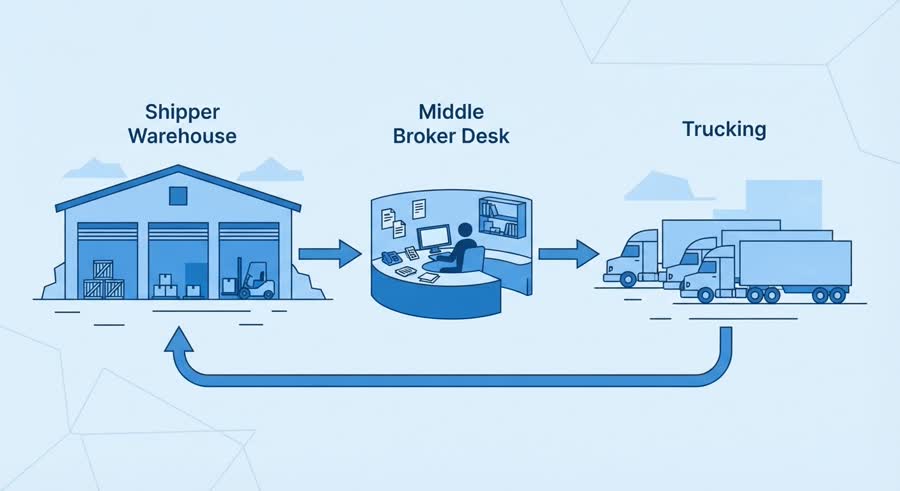
What the client wanted to do was the second one. It was the work of dispatching food ingredient volume to the trucks of fellow truck owners, billing the shipper for the freight charges, and settling the freight charges with the truck owners. The structure was to keep his own 1-ton truck transport business as it was while also running the forwarding business.
3-2. New Permits Are in Principle Prohibited, So One Starts by Transfer and Acquisition
The permit criteria for the freight forwarding business are two. It must meet the supply standards announced by the Minister of Land, Infrastructure and Transport, and it must meet the office criterion.
The current Supply Standards for the Trucking Transport Business (a notice of the Ministry of Land, Infrastructure and Transport) in principle prohibit new permits for the freight forwarding business. This is the same for a main office permit and for a branch office permit. So a person who wants to start a forwarding business newly takes over an existing operator's business by transfer and acquisition.
For a transfer and acquisition, the transferee files a report with the competent authority. A copy of the transfer and acquisition contract is attached to the report, and if the transferee is not already a forwarder, a document proving that no ground for disqualification applies is attached as well. The competent authority must notify whether it accepts the report within 5 days from the day it receives it, and when the report is accepted, the transferee succeeds to the transferor's status as a freight forwarder. When the main office changes to the transferee's office, documents showing that the office has been secured are also checked together.
Procedures follow even after the takeover. If a permitted matter such as the office location is changed, a change report must be filed. To operate resident at a place other than the main office, a branch office permit is needed, and new permits for branch offices are also in principle prohibited. So I suggested that the office chosen this time be one he could use for at least 1 to 2 years.
3-3. What Changes If Household Moving Goods Are Handled
More obligations attach to a forwarder that handles household moving goods. It must enroll in cargo liability insurance as a mandatory matter, and unless the shipper does not want it, it must issue an estimate or contract before starting the transport. The business the client was taking over, and the work he would do in future, was forwarding of general cargo such as food ingredients, so this did not apply to him. This distinction is used again in the insurance question that comes later.
4. The Office That Only Borrowed an Address
4-1. A Non-Resident Office and a Dedicated Room in a Shared Office Are Different
I narrowed the office candidates down to three.
- A. Keep the non-resident (address use) service: The cost is lowest but there is no dedicated space. This is the cause of this request for supplementation.
- B. A dedicated single-person room in a shared office: An independent room with a lock. The monthly fee is several times that of A, and the key question is whether the room number and exclusive floor area can be written in the contract.
- C. Renting a small ordinary office: The clearest option, but with the burden of a deposit and management fees and a long contract term.
Considering the client's finances together with the date of October 1, B was the realistic choice. There were three things to check when choosing B.
4-2. The Three Things We Checked When Choosing a Shared Office
① Are the room and floor area specified in the contract? Some shared offices give only a seat-use right under a "membership agreement" and do not specify the space. With such a contract it is hard to explain the right of use and the size. So the first question on the consultation calls was set as "Will the room number and exclusive floor area be written in the contract?" With this question, three of the five candidates dropped out.
② Does the operator have the authority to provide that space as a place of business? In most shared offices, the operator subleases space it has leased from the building owner. I asked in advance whether we could get a sublease consent confirmation or the operator's confirmation that it provides the space as a place of business. The same document is often requested for business registration as well, so getting it once means there is no need to request it again.
③ Is the building's permitted use reasonable for office use? I obtained the building register and checked the use of the floor in question. If the use allows office facilities or offices, the explanation is simple.
All three are a matter of anticipating the items the officer in charge will check and securing the answers at the contract stage. Attaching conditions before signing the contract takes far less time than going around collecting documents after receiving a request for supplementation.
4-3. A Private Room of a Little Over 3 Pyeong Near Songdo
Three days later the client signed a contract for a dedicated single-person room in a shared office 20 minutes by car from the logistics complex. The room number and exclusive floor area were written in the contract, and the operator agreed to issue a confirmation that it provides the space as a place of business. It was a room with one window, big enough for one desk and two chairs.
He looked around the room and said: It's roomier than a truck driver's seat.
5. Cargo Liability Insurance: Who Is Required to Carry It?
5-1. One Sentence from the Conversation
On the day the office question was settled, I brought up the client's conditions again. They were a copy of the permit certificate and a copy of the cargo liability insurance policy. The client said it offhandedly. I heard cargo insurance is mandatory only for vehicles of 5 tons or more, so it does not apply to my 1-ton truck. I think I can just give the client my auto insurance policy.
The statement that there is no statutory obligation was right, and the statement that the auto insurance policy would do was wrong. Whether the law requires enrollment and whether the client requires it as a contract condition were questions that had to be checked separately.

5-2. The Law Specifies Three Categories Subject to the Obligation
Article 35 of the Trucking Transport Business Act provides for mandatory enrollment in cargo liability insurance and the like. The business operators that must enroll in cargo liability insurance or mutual aid in order to perform their liability for damages arising from loss, damage or delayed delivery of cargo are as follows.
- Transport business operators: Those who own general-type, van-type or special-purpose-type trucks, or tractor-type special vehicles, with a maximum loading capacity of 5 tons or more or a gross weight of 10 tons or more. This is a vehicle criterion, and the "5 tons or more" the client knew of is this part.
- Freight forwarders: Those who handle cargo specified by Ordinance of the Ministry of Land, Infrastructure and Transport. Article 41-13 of the Enforcement Rule specifies that cargo as household moving goods.
- Freight franchise business operators
Those subject to the obligation must enroll in insurance that pays KRW 20 million or more per accident. A business that forwards only household moving goods transport needs KRW 5 million or more. Forwarders enroll per business operator, not per vehicle.
Many people believe that every forwarder is subject to mandatory enrollment, but the provision does not say so. Neither the client's 1-ton truck transport nor his food ingredient forwarding was subject to a statutory obligation.
Even so, the client's customer had required this insurance. With food ingredients, if temperature control goes wrong or arrival is late, the whole shipment becomes a loss. For the shipper, whether the forwarder entrusted with dispatching had a means of compensating that loss was a premise of the contract. Auto insurance is not insurance that compensates damage to the cargo being carried, so that policy could not meet the condition. Even when the law does not require it, enrollment is needed if the contract requires it.
5-3. Why We Took Care of the Insurance in Advance
If he had found this out on the day he submitted documents to the customer after receiving the permit certificate, the schedule would have gone off track. It takes several days from requesting a quotation from an insurer, explaining the business and the items handled, and going through underwriting review until the policy is issued. October 1 would pass in the meantime.
So the insurance was prepared in parallel with the transfer and acquisition report. Before the report was accepted, we obtained quotations for a freight forwarder's cargo liability insurance from two insurers, and organized the items handled (including whether refrigerated and frozen food ingredients were covered) and the expected annual number of shipments. Because enrollment was not mandatory, there was no statutory minimum for the coverage limit, so we asked what limit the customer required and matched that amount. We prepared so that he could apply the day the permit certificate came out.
6. The KRW 100 Million in Capital That an Old Post Mentioned
6-1. The Money He Was About to Borrow from His Brother-in-Law
On the day of the second consultation, the client cautiously brought up one thing. He said he had asked his wife's brother about the capital matter. A post he had found on the internet said that to run a forwarding business, capital or asset valuation of KRW 100 million or more was required, and a colleague who had taken over a forwarding business a few years earlier had also struggled with the proof of bank balance. He intended to borrow money from his brother-in-law for a short time, put it in his account, and obtain a bank balance certificate.
He thought this had nothing to do with the request for supplementation. Since the request did not mention capital, he took it to be merely a document he was supposed to submit anyway and had not yet submitted.

6-2. I Checked When the Standard Had Changed
I first checked when that post had been written. It was a few years earlier. In the meantime the standard had changed.
With the amendment of the Enforcement Rule of the Trucking Transport Business Act that took effect on July 1, 2019, the capital or asset valuation criterion was deleted from the permit criteria for the freight forwarding business and the freight franchise business. Before that, the standard was KRW 100 million or more (KRW 150 million or more if one ran general cargo and household moving goods forwarding together). It was a measure in line with the amendment of the Act intended to reduce the burden on business operators.
The trouble his colleague had with the proof of balance came before that. It was not that the colleague's experience was wrong; the timing was different.
The client put down the mobile phone with which he had been about to call his brother-in-law. The interest while the borrowed money sat in the account for a few days and the burden between the two of them were gone, and so was the risk of building a balance with money that is not actual funds.
6-3. Filtering Out Outdated Information
Permit and licensing information becomes wrong information as time passes. There is no guarantee that a post that appears at the top of search results is the most recent. In the freight field the supply standards, permit requirements and report forms have changed several times.
Filtering out what does not need to be prepared saves the client's time and money as much as confirming what to prepare. This time, that difference was one request to borrow KRW 100 million.
The deletion of the capital criterion does not mean there is less to check. The checks on the office and on grounds for disqualification remain as before.
7. A Schedule Built Backward from October 1
7-1. The Backward Schedule Table
What remained was time. The supplementation deadline, report processing, adding a business type to the business registration, applying for insurance, joining the freight information network as a forwarder, and the customer contract. I placed these six items backward from October 1.
| Timing | What to do | Why |
|---|---|---|
| Two days before the supplementation deadline | Submit the supplement with the new office contract, confirmation and building register | Secure time to answer follow-up questions |
| Right after the supplement | Give the officer in charge dates available for an on-site check | Bring the check date forward even by a day |
| While waiting for report processing | Finalize the insurance quotation, review the draft customer contract | Finish in advance what can be done after the report is accepted |
| The day the permit certificate is received | Apply for insurance, apply to add a business type to the business registration | These two documents are a prerequisite for submission to the customer |
| 2 to 3 days after receipt | Switch to forwarder membership on the freight information network, submit documents to the customer | Prepare the dispatching tools |
| October 1 | First dispatch | The goal |
The reason I made the table was to separate, among the six tasks, those that must wait for one another from those that can be done at the same time. The insurance quotation and the contract review do not have to wait for the report to be accepted. Adding a business type to the business registration and applying for insurance require the permit certificate. If this distinction is blurred, when one thing is late, everything else gets pushed back.

7-2. Why I Had Him Stop Dispatching Before the Report Was Accepted
While drawing up the backward schedule table, I checked one more thing. For several months the client had been passing jobs to fellow truck owners. He connected volume he could not handle himself to truck owners he knew, and he said he did not receive money for it.
It is hard to make an issue merely of connecting colleagues without compensation. But once the new contract with the customer begins, the nature changes. If he receives freight charges from the shipper, distributes them to truck owners and keeps the difference, that is the forwarding business. If he started that before the transfer and acquisition report was accepted, it would amount to running a forwarding business without a permit, and the law punishes this with imprisonment of up to 2 years or a fine of up to KRW 20 million.
So I had him write the effective date in the draft customer contract as after the date the report is accepted. If the customer asked for urgent volume before October 1, that job would be handled, as before, only as transport by the client's own 1-ton truck. I also recommended that the settlement of the transport portion and the forwarding portion be written as separate items in the contract. If there is later a need to explain which money came from which business, the contract can answer.
8. Submitting the Supplement and the On-Site Check
8-1. I Attached One More Page to the Supplement
The supplementary documents were submitted two days before the deadline. To the new office's use agreement, the operator's confirmation that it provides the space as a place of business, and the building register, I attached one more page, an explanation of the circumstances of the supplement.
The explanation set out four things. The circumstances in which he had contracted for an address-use service when first filing, the fact that after receiving the request for supplementation he had changed the office to a dedicated room, the room number and floor area of the new office, and the times at which an on-site check was possible.
On the officer's desk, the documents of the same person arrive for the second time. The first address and the second address are different. If the officer has to phone separately to ask why it changed and whether this address is a real office, processing is delayed by that much. If the answers are written out before being asked, judgment is quicker.
On the day of submission the officer read the explanation and set the on-site check date on the spot. It was the following Wednesday morning.
8-2. The Day of the On-Site Check
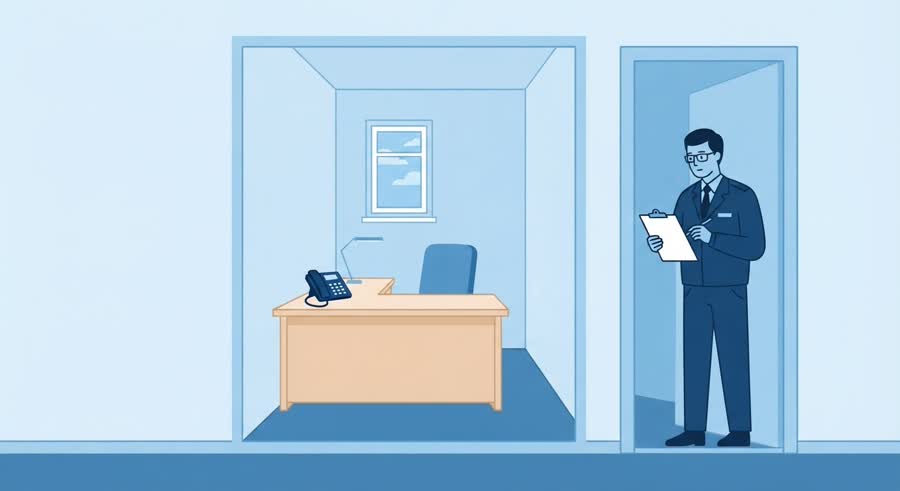
On Wednesday morning, the client was at the office an hour earlier than the appointment. On the desk were a computer, a telephone, the draft customer contract and a list of his fellow truck owners' vehicles. A map of Incheon and the Seoul metropolitan area was on the wall.
The check was not long. The officer compared the room with the room number in the contract, looked around the space, and asked a few questions. What cargo he planned to forward, and whether he would also handle household moving goods. After hearing that it was mainly general cargo such as food ingredients, the check was over.
8-3. A Box of Peaches
Two days after the check, the client stopped by the office. He had a box of peaches in his hands.
He said it was volume that had been blemished while being sorted at the customer's warehouse. They could not be sold but tasted perfectly fine, and the logistics manager had set them aside for him; he had left half at home and brought half. As befits someone who had carried food ingredients for 11 years, the box was packed solidly. It was wrapped in three layers of tape and took a long time to cut open even with a knife.
He added with an embarrassed smile: From now on I'm not loading these peaches myself, I'm dispatching them.

9. After the Report Was Accepted: What Remained Before the First Dispatch
9-1. What We Did the Day the Permit Certificate Came Out
The report was accepted in late September, and the permit certificate came out with the client's name and the new main office written on it. As in the backward schedule table, that afternoon we proceeded with two things together.
- Applying for cargo liability insurance: He chose one of the quotations obtained in advance and applied, and the policy came out two days later.
- Adding a business type to the business registration: An application to add the forwarding business type to his existing transport business registration. The shared office operator's confirmation was used here as well.
Three days later he completed the switch to forwarder membership on the freight information network and sent the customer a copy of the permit certificate and a copy of the insurance policy.
9-2. What to Manage After the Takeover
The memo I left for the client was four lines.
- File a change report if you move the office. It may also apply when the room changes as you renew the shared office contract.
- A branch office is hard to open anew. To keep a dispatching space resident near the logistics complex, a branch office permit is needed, and new permits for branch offices are also in principle prohibited.
- Manage the renewal date of the cargo liability insurance. For now it is a customer's contract condition, but once he handles household moving goods, it becomes a statutory obligation from that point.
- Keep the settlement of transport and forwarding separate. Do not mix income from transport by his own 1-ton truck with forwarding commissions.
10. From Truck to Desk
The first dispatch went out on October 1. The customer's volume was split and loaded onto the vehicles of three fellow truck owners. At 4 a.m. the client was not at the logistics complex but sitting at his desk in the office. He said six phone calls came in at once.
It took nearly four weeks from the first contact to receiving the permit certificate. The October 1 date promised to the customer was kept.
He did not dispose of his own 1-ton truck. He cut his driving from five days a week to two, and only on days when volume overflows does he drive to a few nearby institutional canteens himself. He manages his back with physical therapy once a week.
A text message came in mid-December saying that the second child had been born. He said he had been at the hospital on the day of the birth. He reportedly did the dispatching from the hospital corridor by mobile phone.
11. Comparing the Freight Transport Business and the Forwarding Business
11-1. The Difference Between the Two Businesses
Even for the same freight permit, what must be prepared is different.
| Item | Transport business | Forwarding business |
|---|---|---|
| Core subject | Vehicles (commercial license plates) and garage | Office |
| New permit | In principle prohibited (some exceptions such as vehicles for parcel delivery) | In principle prohibited |
| How to start | Mostly transfer and acquisition report | Transfer and acquisition report |
| Capital criterion | None | None (deleted on July 1, 2019) |
| Cargo liability insurance | Mandatory if one owns certain vehicles, such as those of 5 tons or more | Mandatory if household moving goods are handled |
| When making changes | Change permit or change report | Change report of permitted matters |
| Where applicants often get stuck | Supply standards, garage | Reality of the office, transfer and acquisition documents |
11-2. What Is Easy to Miss in a Transfer and Acquisition
A transfer and acquisition of a freight transport business is not finished with the transfer registration of the vehicle alone. The report for taking over the business must go along with it. If only the vehicle is handed over and the business procedure is missed, the basis for using the commercial license plate becomes shaky.
A forwarding business has no vehicles, so what is taken over is the permit itself. If the transferee does not use the transferor's office as it is, whether the transferee's office meets the criterion becomes the issue. When a transport business operator also runs a forwarding business, as with this client, the permits, insurance and settlement of the two businesses must be managed separately.

12. Frequently Asked Questions (FAQ)
Q1. Can I obtain a new freight forwarding business permit?
In principle you cannot. This is because the Supply Standards for the Trucking Transport Business, a notice of the Ministry of Land, Infrastructure and Transport, in principle prohibit new permits for the freight forwarding business. You start by taking over an existing operator's business through a transfer and acquisition contract, and the transferee files a transfer and acquisition report with the competent authority.
Q2. Can I run a forwarding business from a non-resident office (address-use service)?
It is difficult. The permit criterion for the forwarding business is an office of the floor area required for business operations, and the authority checks the space actually used and the right to use it. An address-use contract that does not specify a dedicated space has trouble explaining these two points, and often leads to a request for supplementation. If you use a shared office, it is better to choose a dedicated room where the room number and exclusive floor area are written in the contract.
Q3. I saw a post saying a forwarding business needs KRW 100 million in capital.
It is not needed now. With the amendment of the Enforcement Rule that took effect on July 1, 2019, the capital or asset valuation criterion was deleted from the permit criteria for the freight forwarding business. Please check when the posts you find were written, and you do not need to borrow money to build a balance.
Q4. My truck is 1 ton. If I run a forwarding business, do I have to enroll in cargo liability insurance?
If you forward only general cargo, there is no statutory obligation to enroll. Among forwarders, those subject to the obligation are those who handle household moving goods. For transport business operators, the obligation applies to those who own certain vehicles, such as those with a maximum loading capacity of 5 tons or more, so a 1-ton truck does not qualify either. However, shippers often require a policy as a contract condition, so check the customer's conditions first and, if necessary, obtain a quotation in advance.
Q5. Can I forward a customer's volume before the transfer and acquisition report is accepted?
No. Receiving freight charges, dispatching to other truck owners and keeping the difference is the forwarding business, and doing it without a permit is subject to punishment. If you contract with a customer, write the effective date as after the report is accepted, and handle volume before that only as transport by your own vehicle.
Q6. What if I want to move the office or set up one more after the takeover?
If you move the office, you must file a change report of permitted matters. It may also apply when the room in a shared office changes, so check before renewing the contract. To operate resident at a place other than the main office, a branch office permit is needed, and new permits for branch offices are also in principle prohibited.

13. Practical Checklist
① Check the business you will take over first. New permits for the forwarding business are in principle prohibited, so you start with a transfer and acquisition contract and report.
② Look at the wording of the office contract first. Before filing, check whether it is a contract that only lends an address or a dedicated space in which the room and floor area are specified.
③ Look at the date of internet posts. Many people spend time and money preparing requirements that have already been deleted, such as the capital and asset valuation criterion.
④ Decide on cargo liability insurance by the cargo handled and the customer's contract conditions. The statutory obligation lies with forwarders that handle household moving goods, and for general cargo forwarding you enroll when the shipper requires it as a contract condition.
⑤ Divide the tasks before and after the report is accepted. Do the insurance quotation and contract review before acceptance, and the insurance application and adding the business type to the business registration right after receiving the permit certificate.
⑥ If you run transport and forwarding together, keep the settlements separate. If you divide the items at the contract stage, it is easier to explain later.
The supply standards and office criterion for the freight forwarding business, and the scope of enrollment in cargo liability insurance, may change with amendments, and their application differs depending on the form of business. The requirements differ from case to case, so individual confirmation with the competent authority is needed.
The two lines in the request for supplementation and the insurance policy the customer required were asking about the same thing. Whether this business actually exists in that place, and whether it can actually compensate if an accident happens. Once the office and the insurance supplied those answers, all that remained was to fit the schedule.
This article is a story composed to help readers understand.
We are an administrative agent office located in Songdo, Incheon (POSCO Tower-Songdo). We handle administrative appeals, permit, license and report filing services, immigration for foreign nationals (visas and stay), and regular administrative management. For permits such as the freight forwarding business, where the order of preparation determines the schedule, the office, the insurance and the timing of the contract must be aligned together before filing.
━━━━━━━━━━
Hwang Yunsang Administrative Agent Office
📍 2697, POSCO Tower-Songdo, 165 Convensia-daero, Yeonsu-gu, Incheon
📞 010-3374-2687
🌐 www.hwangadmin.com
━━━━━━━━━━
#FreightForwardingBusiness #FreightForwardingPermit #ForwardingBusinessTransferAcquisition #CargoLiabilityInsurance #TruckingTransportBusinessAct #1TonTruck #FreightTransportBusiness #SharedOfficeSpace #PermitsAndLicenses #AdministrativeAgent #IncheonAdministrativeAgent #SongdoAdministrativeAgent
If you are curious about a similar situation, please feel free to leave an inquiry.